
Centrifugal Seal (CS)
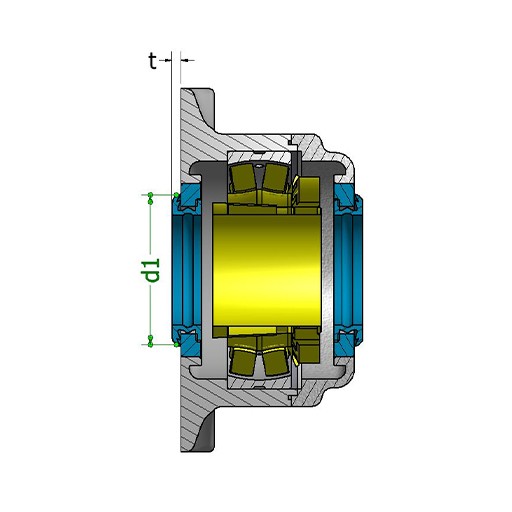
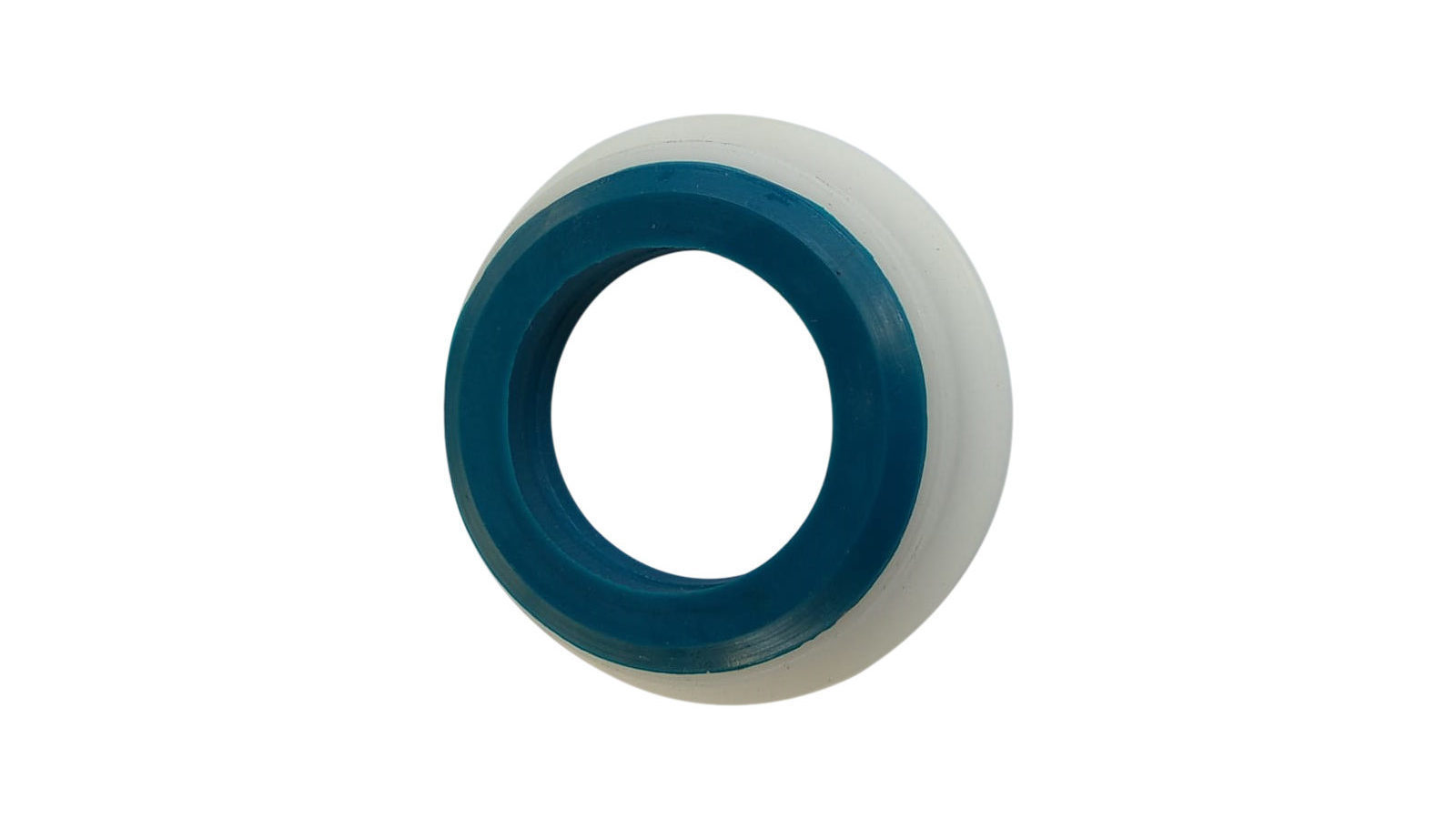
If dust and water get inside a bearing, this leads to premature failure. Therefore choosing the right protective seals is important for the working life of a stainless steel bearing unit. The centrifugal seal (CS) is designed for harsh conditions where there is a risk of contamination.
Why Choose a Centrifugal Seal?
Dusty, abrasive environments are one of the most difficult for bearings. Because when handling powders or in processes generating dust, the protection of bearings against contamination requires special consideration. Radial oil seals, such as the AS and SA seals made of nitrile rubber, are selected mainly for ordinary conditions. But they are generally unsatisfactory in harsh or dusty conditions. Over time, the nitrile rubber is attacked by dirt, water, sand and various other contaminants. Small particles get into the soft material of the rubber. And the lip can cause fretting of the shaft (causing a groove under the lip). Tiny particles of moisture on the shaft can be drawn past the lip. And a jet of water sprayed at high pressure directly at the lip seal penetrates past the seal into the bearing.
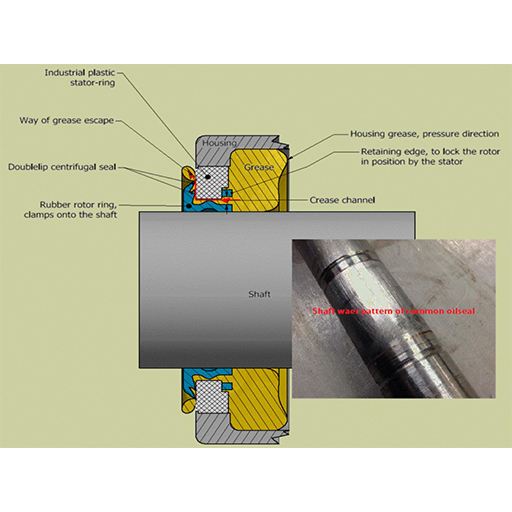
Extreme Bearing has developed the centrifugal seal to solve these problems! Many Extreme Bearing housings feature centrifugal seals specially developed to repel dirt and contaminants using centrifugal force generated by the shaft. The CS seal works for speeds up to 5 m/s and for temperatures from -25°C up to 95°C.
Triple Barrier Bearing Labyrinth Seal
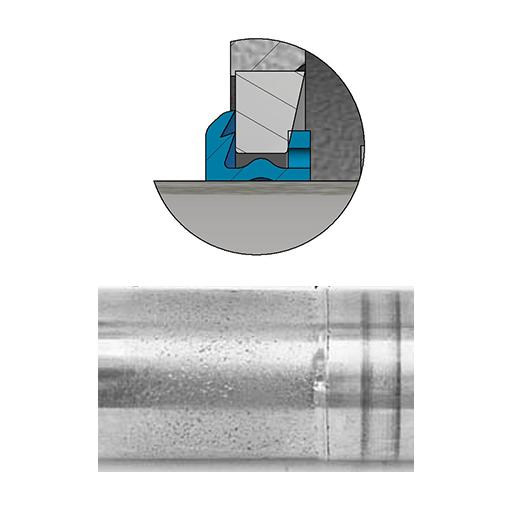
CS seals are superior against sand, dirt and detergents
- Double Lip Centrifugal Seal - Primary barrier using centrifugal force
- Grease-filled Housing - Secondary barrier preventing contamination ingress
- 2-RS Bearing Seal - Tertiary protection integrated into bearing
Firstly, the centrifugal seal made of rubber attached to the shaft provides a primary barrier. Because it repels dirt and contaminants using the centrifugal force generated by the shaft. Secondly, the bearing housing is filled with grease to prevent contaminants from entering and damaging the bearing. Finally, there is a type of bearing seal called 2-RS to protect the bearing.
Working Principle
The rubber of the CS-seal clamps around the shaft and is turning with the shaft vertically against the stator ring. Because the lips are positioned vertically against the stator ring, the dirt will be repelled by the centrifugal force from the sealing lips. The rotor ring can be moved eccentrically in relation to the stator ring. In this way, the centrifugal seal is able to absorb any misalignment of the shaft without creating wear on the rubber lips.
The grease passes the retaining edge through the lubrication channels under the stator ring and between the two sealing lips and stator ring. This makes sure that any dirt is flushed away. The clamping of the rubber rotor ring around the shaft means that the bearing can be assembled even on a shaft which has suffered light surface damage such as a groove.
Key Benefits
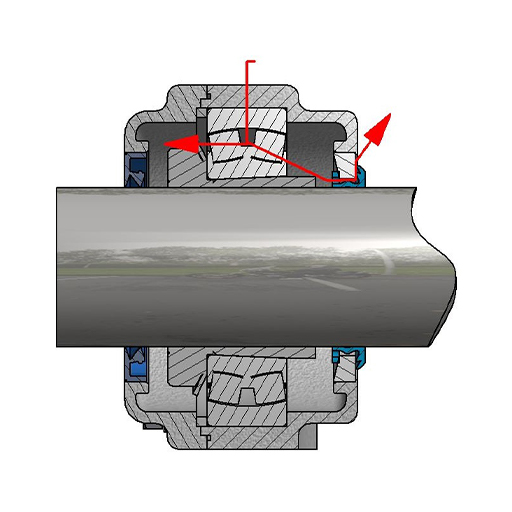
- Centrifugal Force Protection - Uses shaft rotation to repel contaminants
- Double Lip Design - Enhanced sealing capability
- Self-Cleaning Action - Grease flow flushes away dirt
- Misalignment Tolerance - Eccentric movement capability
- Damaged Shaft Tolerance - Can seal on slightly damaged surfaces
- Speed Range - Up to 5 m/s
- Temperature Range - -25°C to 95°C
- Superior to Standard Seals - Outperforms AS/SA seals in harsh conditions
CS Seal Dimensions
When applying the CS bearing labyrinth seal, it must be taken into account that it is not flush with the surface of the housing and expands the dimensions of the housing slightly:
| 20 | 32 | 3 |
| 25 | 40 | 3 |
| 30 | 46 | 3 |
| 35 | 50 | 3 |
| 40 | 60 | 3 |
| 45 | 60 | 3 |
| 50 | 70 | 3 |
| 55 | 70 | 3 |
| 60 | 80 | 3 |
When to Use CS Centrifugal Seals
- Dusty and abrasive environments
- Washdown applications
- High-pressure water spray areas
- Powder handling processes
- Detergent exposure
- Food processing plants
- Agricultural applications
- Mining and quarries
- Any environment where AS/SA seals fail prematurely
The CS centrifugal seal represents a significant advancement in bearing protection technology for harsh environments.
Contra o que estas vedações resistem – NBR (vedações AS / SA / CS)
A lista abaixo apresenta os produtos químicos, fluidos e gases contra os quais o elemento de vedação em NBR (borracha nitrílica) das vedações AS, SA e CS resiste de forma confiável. Uma marca numa coluna de temperatura indica que a vedação é adequada para esse meio a essa temperatura. As células vazias indicam que o meio não é recomendado a essa temperatura — opte então por uma vedação superior (FKM, silicone ou PTFE).
Valores indicativos baseados em tabelas industriais (Parker O-Ring Handbook, Trelleborg, ERIKS). O utilizador final é responsável por validar a adequação à sua aplicação específica — concentração, pressão, esforço mecânico e tempo de exposição importam. Em caso de dúvida, contacte a Extreme Bearing para uma recomendação personalizada.
| Substância química | 20°C / 68°F | 60°C / 140°F | 100°C / 212°F |
|---|---|---|---|
| Formaldehyde (40%) | ✓ | ||
| Ascorbic ácido | ✓ | ✓ | |
| Citric ácido | ✓ | ✓ | |
| Ácidos gordos (>C6) | ✓ | ||
| Oxalic ácido | ✓ | ||
| Phthalic ácido | ✓ | ||
| Stearic ácido | ✓ | ✓ | |
| Tannic ácido (10%) | ✓ | ✓ | |
| Tartaric ácido | ✓ | ✓ | |
| Boric ácido | ✓ | ✓ | |
| Carbonic ácido | ✓ | ✓ | |
| Silicic ácido | ✓ | ||
| Sulfitos | ✓ | ✓ | |
| Ammonia, aquoso | ✓ | ||
| Soda cáustica e potassa | ✓ | ||
| Lime (CaO) | ✓ | ✓ | |
| Alum | ✓ | ✓ | ✓ |
| Aluminium cloreto | ✓ | ✓ | |
| Aluminium sulfato | ✓ | ✓ | |
| amónio cloreto | ✓ | ✓ | |
| Brines, saturado | ✓ | ✓ | |
| Bromide (K) solução | ✓ | ✓ | |
| Calcium cloreto | ✓ | ✓ | |
| Chlorates of Na, K, Ba | ✓ | ✓ | |
| Chlorides of Na, K, Ba | ✓ | ✓ | ✓ |
| Copper salts (most) | ✓ | ✓ | |
| Ferric cloreto | ✓ | ✓ | |
| Ferrous sulfato | ✓ | ✓ | |
| Lead acetate | ✓ | ||
| Mercuric cloreto | ✓ | ✓ | |
| Mercury | ✓ | ✓ | ✓ |
| Nickel salts | ✓ | ✓ | |
| Nitratos de Na, K e NH3 | ✓ | ✓ | |
| nitrito (Na) | ✓ | ✓ | |
| Silver nitrato | ✓ | ✓ | |
| sódio carbonato | ✓ | ✓ | |
| sódio silicate | ✓ | ✓ | |
| sódio sulfureto | ✓ | ✓ | |
| Stannic cloreto | ✓ | ||
| Sulphates (Na, K, Mg, Ca) | ✓ | ✓ | |
| Zinc cloreto | ✓ | ✓ | |
| Cyclohexane | ✓ | ✓ | |
| Naptha | ✓ | ✓ | |
| Petroleum spirits | ✓ | ✓ | |
| Paraffin wax | ✓ | ✓ | |
| Óleos diesel | ✓ | ✓ | |
| Óleos minerais | ✓ | ✓ | |
| Óleos vegetais e animais | ✓ | ✓ | |
| Alcohols | ✓ | ||
| Methanol | ✓ | ||
| Glycerine | ✓ | ✓ | |
| Glycols | ✓ | ✓ | |
| Glycol, ethylene | ✓ | ✓ | |
| Acetylene | ✓ | ✓ | |
| Refrigerantes fluorados | ✓ | ||
| Sulphur | ✓ | ✓ | |
| Água destilada | ✓ | ✓ | |
| Água macia | ✓ | ✓ | |
| Água dura | ✓ | ✓ | |
| Água do mar | ✓ | ✓ | |
| Moist ar | ✓ | ✓ | |
| Beer | ✓ | ✓ | |
| Sumos de fruta | ✓ | ✓ | |
| Gelatine | ✓ | ✓ | |
| Sucos de carne | ✓ | ✓ | |
| Milk products | ✓ | ✓ | |
| Molasses | ✓ | ✓ | |
| Starch | ✓ | ✓ | |
| Sugar, syrups & jams | ✓ | ✓ | |
| Tallow | ✓ | ✓ | |
| Urea (30%) | ✓ | ✓ | |
| Yeast | ✓ | ✓ | |
| Detergents, synthetic | ✓ | ✓ | |
| Silicone fluids | ✓ | ✓ | |
| Agentes molhantes (<5%) | ✓ | ✓ | |
| Ethanol | ✓ | ||
| Isopropanol (IPA) | ✓ | ||
| Propylene glycol | ✓ | ✓ | |
| água/glycol coolant | ✓ | ✓ | |
| Fluido hidráulico (HL, HLP, HM, mineral) | ✓ | ✓ | |
| Fluido hidráulico HFA (óleo em água) | ✓ | ✓ | |
| Fluido hidráulico HFC (água-glicol) | ✓ | ✓ | |
| Fluido de freio (DOT 3/4, glicol) | ✓ | ||
| Gasolina | ✓ | ||
| Kerosene | ✓ | ✓ | |
| Jet combustível (JP-4/JP-5/JP-8) | ✓ | ✓ | |
| óleo combustível / combustível óleo | ✓ | ✓ | |
| LPG (propane, butane) | ✓ | ✓ | |
| AdBlue (urea solução 32.5%) | ✓ | ✓ | |
| Transformer óleo | ✓ | ✓ | |
| Turbine óleo | ✓ | ✓ | |
| Gear óleo | ✓ | ✓ | |
| Fluido de transmissão ATF | ✓ | ✓ | |
| Graxa de silicone | ✓ | ✓ | |
| Graxa de sabão de lítio | ✓ | ✓ | |
| comprimido ar, seco | ✓ | ✓ | |
| Nitrogen (N2) | ✓ | ✓ | ✓ |
| Carbon dioxide (CO2) | ✓ | ✓ | |
| Hydrogen (H2) | ✓ | ✓ | |
| Helium (He) | ✓ | ✓ | ✓ |
| Argon (Ar) | ✓ | ✓ | ✓ |
| Ethylene (C2H4) | ✓ | ✓ | |
| Propylene (C3H6) | ✓ | ✓ | |
| Methane (CH4) | ✓ | ✓ | |
| gás natural | ✓ | ✓ | |
| Carbon monoxide (CO) | ✓ | ✓ | |
| Refrigerante R22 (HCFC) | ✓ | ||
| Refrigerante R134a (HFC) | ✓ | ✓ | |
| Refrigerante R1234yf (HFO) | ✓ | ✓ | |
| Refrigerante R717 (amônia) | ✓ | ||
| Refrigerante R744 (CO2) | ✓ | ✓ | |
| Vinho | ✓ | ✓ | |
| Café / chá | ✓ | ✓ | |
| Sumo vegetal | ✓ | ✓ | |
| Limpador CIP alcalino (1-3%) | ✓ | ||
| Pentane | ✓ | ✓ | |
| Hexane | ✓ | ✓ | |
| Heptane | ✓ | ✓ | |
| Octane | ✓ | ✓ | |
| Isobutylene | ✓ | ||
| Butanol (n-butanol) | ✓ | ||
| n-Propanol | ✓ | ||
| Oleic ácido | ✓ | ||
| Palmitic ácido | ✓ | ||
| Adipic ácido | ✓ | ✓ | |
| Lauric ácido | ✓ | ||
| amónio sulfato | ✓ | ✓ | |
| amónio nitrato | ✓ | ✓ | |
| Copper sulfato | ✓ | ✓ | |
| Zinc sulfato | ✓ | ✓ | |
| Magnesium sulfato | ✓ | ✓ | |
| Magnesium cloreto | ✓ | ✓ | |
| Barium cloreto | ✓ | ✓ | |
| potássio cloreto | ✓ | ✓ | ✓ |
| sódio thiosulphate | ✓ | ✓ | |
| Refrigerante R32 (HFC) | ✓ | ✓ | |
| Refrigerante R410A (mistura HFC) | ✓ | ✓ | |
| Refrigerante R454B (mistura HFO) | ✓ | ✓ | |
| Refrigerante R1234ze (HFO) | ✓ | ✓ | |
| Refrigerante R290 (propano) | ✓ | ✓ | |
| Refrigerante R600a (isobutano) | ✓ | ✓ | |
| Sulphur hexafluoride (SF6) | ✓ | ✓ | |
| Nitrous oxide (N2O) | ✓ | ✓ | |
| Olive óleo | ✓ | ✓ | |
| Soybean óleo | ✓ | ✓ | |
| Palm óleo | ✓ | ✓ | |
| Rapeseed (canola) óleo | ✓ | ✓ | |
| Fish óleo | ✓ | ✓ | |
| Manteiga | ✓ | ✓ | |
| Cheese curds / whey | ✓ | ✓ | |
| Eggs (raw / líquido) | ✓ | ✓ | |
| Mostarda | ✓ | ✓ | |
| líquido sugar / glucose syrup | ✓ | ✓ | |
| Quaternary amónio compounds (QACs) | ✓ | ||
| Chlorhexidine solução | ✓ | ✓ | |
| Óleo de corte (emulsão solúvel em água) | ✓ | ✓ | |
| Óleo de corte (puro, mineral) | ✓ | ✓ | |
| HVO renewable diesel | ✓ | ✓ | |
| Marine heavy combustível óleo (HFO) | ✓ | ||
| Lama de perfuração (base água) | ✓ | ||
| Lama de perfuração (base óleo) | ✓ | ✓ | |
| Lama de cimento | ✓ | ||
| Lama de cinza volante | ✓ | ✓ | |
| Cyanide solução (gold mining, NaCN) | ✓ |