
Radial Bearing Shaft Seals – AS and SA
AS and SA are radial oil seals for stainless steel bearing housings. They seal bearing housings against contaminants with long-lasting efficiency. There are two versions available, AS and SA. Each version has a specific design for specific applications.
The seals are made of nitrile rubber (NBR) which provides good resistance against mineral oils and greases, making them suitable for a wide range of standard industrial applications.
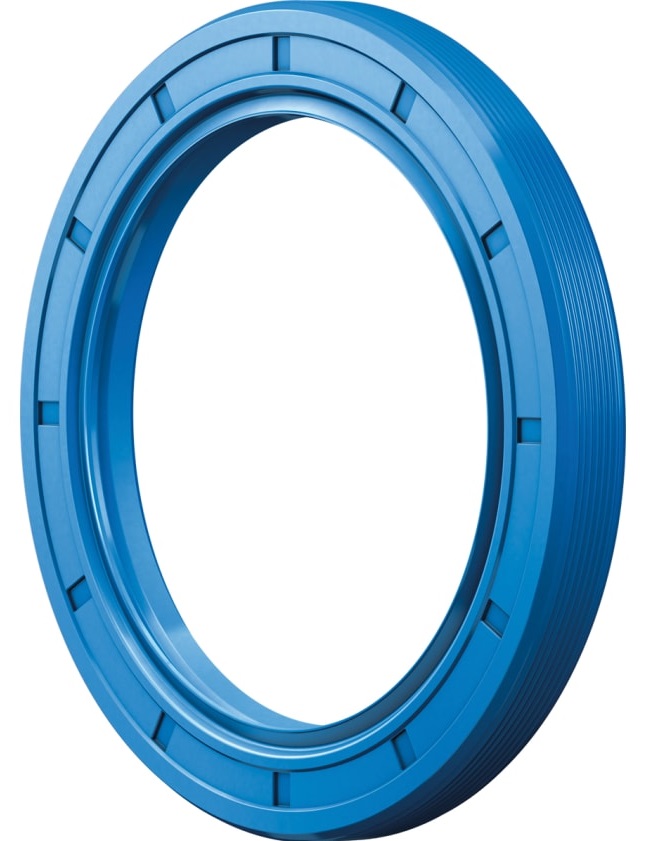
AS Seal
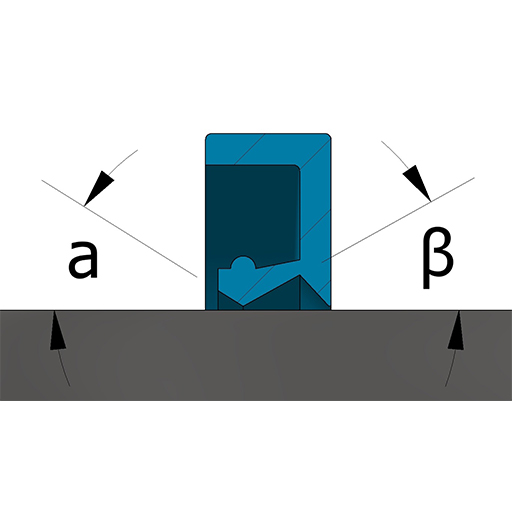
AS oil seals are designed with asymmetric lip angles. The angle α between the shaft and lip on the air side is larger than the angle β on the lubricant side. This geometry is designed to prevent contamination from entering the bearing housing while retaining lubricant inside. Normally, seals are designed with a small angle β on the lubricant side and a large angle α on the air side. This prevents lubricant from leaking out of the system. However, when grease is used, the difference in angles is less important and often reversed to provide better sealing against contaminants from outside. This is what we call the AS version.
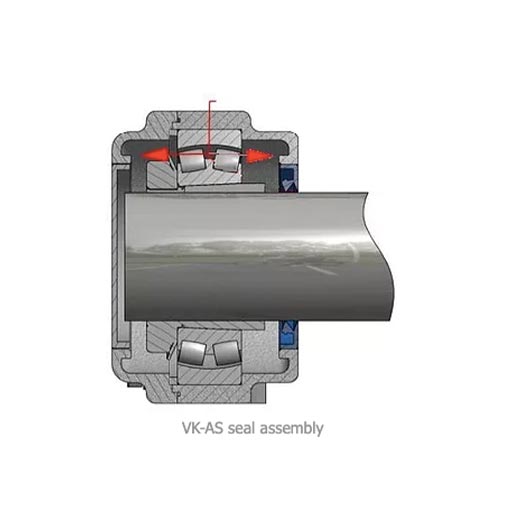
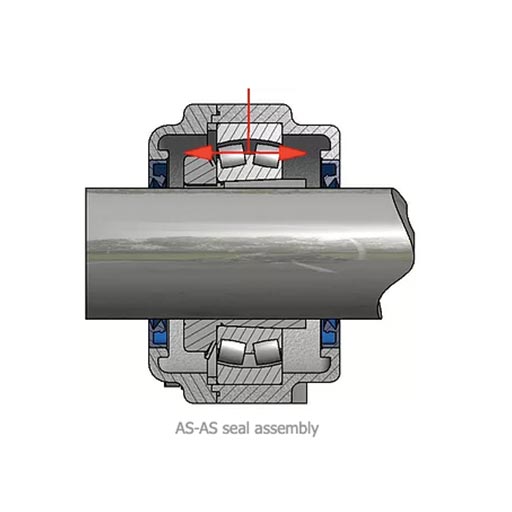
The AS seal provides reliable sealing for bearing housings in standard to moderately contaminated environments, especially suitable for use in closed bearing assemblies such as AS / AS-VK assembly. Used on places with none abrasive surrounding. Just to close and become a maintenance free bearing unit sealed against contaminants.

Mounting tip
It is necessary that, if you do the initial greasing, to keep the cap a little bit open. To ensure that air can escape.
SA Seal
SA oil seals are designed with asymmetric lip angles as shown in the illustration. The angle α between the shaft and lip on the air side is smaller than the angle β on the lubricant side to prevent lubricant from leaking out of the system. When grease is used, the difference in angles is less important and often reversed to provide better sealing against contaminants from outside. We call this seal version SA. Leakage is less of a concern here due to the consistency of grease, which prevents excessive loss of lubricant. Therefore the main purpose of the grease seal is to keep contaminants out.
To improve bearing life by the correct use of bearing shaft seals, it is recommended to use an automatic lubricator or lubricate regularly. Only a small quantity of grease is necessary when slowly flushed into the bearing cavity to force dust and moisture away from the seal lips.
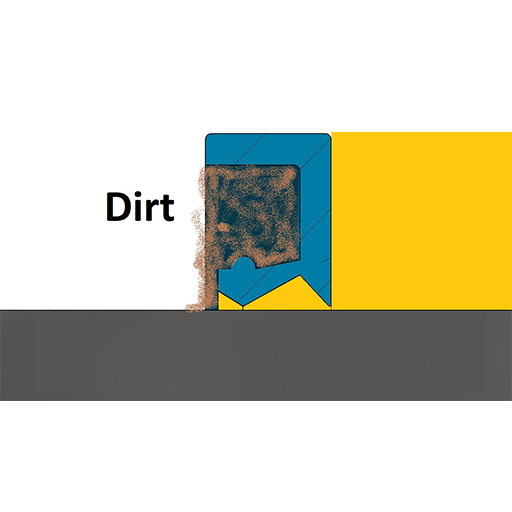
Note – SA Seal Is Not for Food Applications
The SA seal is not suitable for applications where high hygiene is demanded because the cavity in the lip can act as a chamber for collecting dirt. For high hygiene applications, use our CC design.
Not suitable for abrasive environments
The AS seal and, to a lesser extent, the SA seal are not suitable for applications where there is a risk of contamination from abrasive materials. For this type of application, use our CS design.
Grease Is a Great Help to Sealing Bearing Housings Against Contaminants
Grease can be a great help to sealing bearing housings against contaminants. The gaps between the lips of the centrifugal seal and the stator must be sealed to keep out dust and water. To improve bearing life for centrifugal bearing shaft seals, it is recommended to use an automatic lubricator or to lubricate regularly. Only a small quantity of grease is necessary when slowly flushed into the bearing cavity to force dust and moisture away from the working parts.
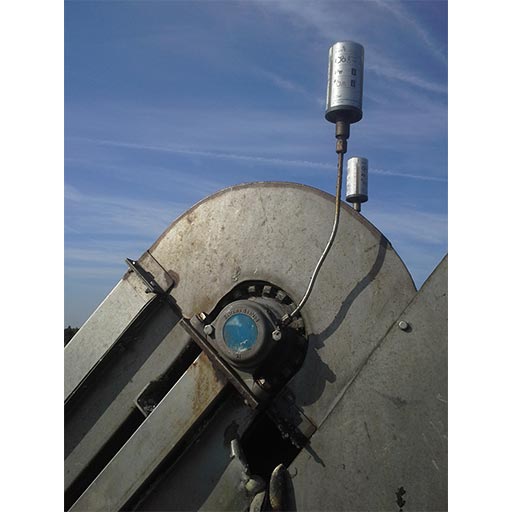
Examples of Grease Diagrams Using AS Bearing Shaft Seals
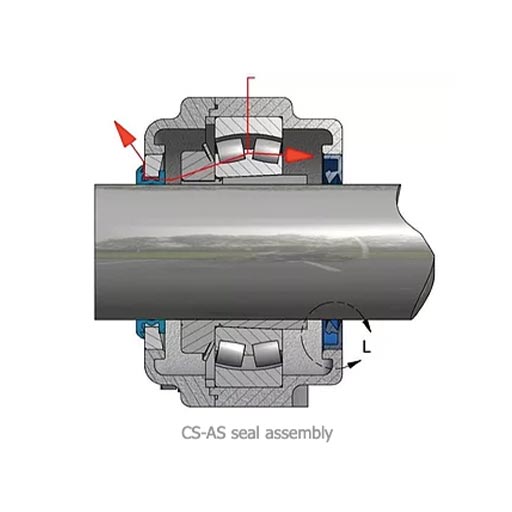
If the contamination is only on one side of the bearing unit, a seal combination can be chosen that is based on refilling the grease on this side. In this way, the contamination along with the grease shall flow away from the sealing lips. An example of such an assembly, a CS-AS combination, is shown in one of the illustrations with the path of the grease shown by the red arrows.
Important Information for Initial Greasing of Pressure-Tight Bearing Units
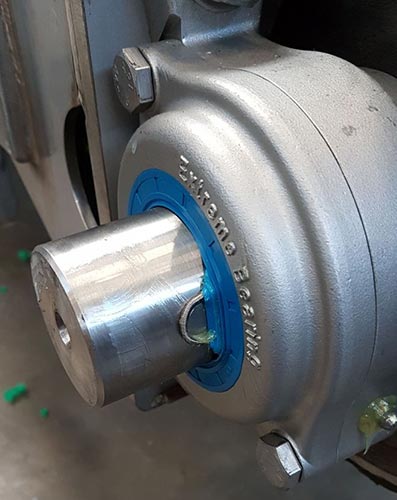
In some configurations, the bearing units from Extreme Bearing are bearing shaft seals pressure-tight. Therefore it is necessary to keep the cap a little bit open while you do the initial greasing. Otherwise problems like in the picture shown here can occur.
In addition, whenever it is necessary to add some more grease later, you should always take care not to create overpressure in the housing. The Extreme Bearing units are pressure-tight when used with the following configurations of seals: AS/AS, AS/VK, CL/CL and CL/VK.
Waar Deze Afdichtingen Tegen Bestand Zijn – NBR (AS / SA / CS)
Onderstaande lijst toont de chemicaliën, vloeistoffen en gassen waar het NBR (nitrilrubber) afdichtelement van AS-, SA- en CS-afdichtingen betrouwbaar tegen bestand is. Een vinkje in een temperatuurkolom betekent dat de afdichting dat medium bij die temperatuur aankan. Lege cellen betekenen dat het medium bij die temperatuur niet wordt aanbevolen — kies dan een hoogwaardiger afdichting (FKM, silicone of PTFE).
Indicatieve waarden, gebaseerd op industriële compatibiliteitstabellen (Parker O-Ring Handbook, Trelleborg, ERIKS). De eindgebruiker is verantwoordelijk voor het valideren van de geschiktheid voor de specifieke toepassing — concentratie, druk, mechanische belasting en blootstellingstijd zijn van belang. Bij twijfel: neem contact op met Extreme Bearing voor toepassingsspecifiek advies.
| Chemische stof | 20°C / 68°F | 60°C / 140°F | 100°C / 212°F |
|---|---|---|---|
| Formaldehyde (40%) | ✓ | ||
| Ascorbinezuur | ✓ | ✓ | |
| Citroenzuur | ✓ | ✓ | |
| Vetzuren (>C6) | ✓ | ||
| Oxaalzuur | ✓ | ||
| Ftaalzuur | ✓ | ||
| Stearinezuur | ✓ | ✓ | |
| Tanninezuur (10%) | ✓ | ✓ | |
| Wijnsteenzuur | ✓ | ✓ | |
| Boorzuur | ✓ | ✓ | |
| Koolzuur | ✓ | ✓ | |
| Kiezelzuur | ✓ | ||
| Sulfieten | ✓ | ✓ | |
| Ammoniak, waterig | ✓ | ||
| Natronloog & kaliloog | ✓ | ||
| Kalk (CaO) | ✓ | ✓ | |
| Aluin | ✓ | ✓ | ✓ |
| Aluminiumchloride | ✓ | ✓ | |
| Aluminium sulfaat | ✓ | ✓ | |
| Ammoniumchloride | ✓ | ✓ | |
| Pekel, verzadigd | ✓ | ✓ | |
| Bromide (K) oplossing | ✓ | ✓ | |
| Calciumchloride | ✓ | ✓ | |
| Chloraten van Na, K, Ba | ✓ | ✓ | |
| Chloriden van Na, K, Ba | ✓ | ✓ | ✓ |
| Koperzouten (meeste) | ✓ | ✓ | |
| IJzer(III)chloride | ✓ | ✓ | |
| IJzer(II)sulfaat | ✓ | ✓ | |
| Loodacetaat | ✓ | ||
| Kwik(II)chloride | ✓ | ✓ | |
| Kwik | ✓ | ✓ | ✓ |
| Nikkelzouten | ✓ | ✓ | |
| Nitraten van Na, K en NH3 | ✓ | ✓ | |
| nitriet (Na) | ✓ | ✓ | |
| Zilvernitraat | ✓ | ✓ | |
| Natriumcarbonaat | ✓ | ✓ | |
| Natriumsilicaat | ✓ | ✓ | |
| Natriumsulfide | ✓ | ✓ | |
| Tin(IV)chloride | ✓ | ||
| Sulfaten (Na, K, Mg, Ca) | ✓ | ✓ | |
| Zinkchloride | ✓ | ✓ | |
| Cyclohexane | ✓ | ✓ | |
| Nafta | ✓ | ✓ | |
| Petroleumether | ✓ | ✓ | |
| Paraffinewas | ✓ | ✓ | |
| Dieselolie | ✓ | ✓ | |
| Minerale oliën | ✓ | ✓ | |
| Plantaardige en dierlijke oliën | ✓ | ✓ | |
| Alcohols | ✓ | ||
| Methanol | ✓ | ||
| Glycerine | ✓ | ✓ | |
| Glycolen | ✓ | ✓ | |
| Ethyleenglycol | ✓ | ✓ | |
| Acetyleen | ✓ | ✓ | |
| Gefluoreerde koudemiddelen | ✓ | ||
| Zwavel | ✓ | ✓ | |
| Water, gedestilleerd | ✓ | ✓ | |
| Water, zacht | ✓ | ✓ | |
| Water, hard | ✓ | ✓ | |
| Zeewater | ✓ | ✓ | |
| Vochtige lucht | ✓ | ✓ | |
| Bier | ✓ | ✓ | |
| Vruchtensappen | ✓ | ✓ | |
| Gelatine | ✓ | ✓ | |
| Vleessappen | ✓ | ✓ | |
| Zuivelproducten | ✓ | ✓ | |
| Melasse | ✓ | ✓ | |
| Zetmeel | ✓ | ✓ | |
| Suiker, siropen & jam | ✓ | ✓ | |
| Talg | ✓ | ✓ | |
| Urea (30%) | ✓ | ✓ | |
| Gist | ✓ | ✓ | |
| Synthetische reinigingsmiddelen | ✓ | ✓ | |
| Siliconenvloeistoffen | ✓ | ✓ | |
| Bevochtigingsmiddelen (<5%) | ✓ | ✓ | |
| Ethanol | ✓ | ||
| Isopropanol (IPA) | ✓ | ||
| Propyleenglycol | ✓ | ✓ | |
| Water/glycol-koelvloeistof | ✓ | ✓ | |
| Hydraulische vloeistof (HL, HLP, HM, mineraal) | ✓ | ✓ | |
| Hydraulische vloeistof HFA (olie-in-water-emulsie) | ✓ | ✓ | |
| Hydraulische vloeistof HFC (water-glycolmengsel) | ✓ | ✓ | |
| Remvloeistof (DOT 3/4, glycol) | ✓ | ||
| Benzine | ✓ | ||
| kerosine | ✓ | ✓ | |
| Vliegtuigbrandstof (JP-4/JP-5/JP-8) | ✓ | ✓ | |
| Stookolie / brandstofolie | ✓ | ✓ | |
| LPG (propaan, butaan) | ✓ | ✓ | |
| AdBlue (ureumoplossing 32,5%) | ✓ | ✓ | |
| Transformatorolie | ✓ | ✓ | |
| Turbineolie | ✓ | ✓ | |
| Tandwielolie | ✓ | ✓ | |
| ATF-transmissievloeistof | ✓ | ✓ | |
| Siliconenvet | ✓ | ✓ | |
| Lithiumzeepvet | ✓ | ✓ | |
| gecomprimeerde lucht, droog | ✓ | ✓ | |
| Stikstof (N2) | ✓ | ✓ | ✓ |
| Kooldioxide (CO2) | ✓ | ✓ | |
| Waterstof (H2) | ✓ | ✓ | |
| Helium (He) | ✓ | ✓ | ✓ |
| Argon (Ar) | ✓ | ✓ | ✓ |
| Ethyleen (C2H4) | ✓ | ✓ | |
| Propyleen (C3H6) | ✓ | ✓ | |
| Methaan (CH4) | ✓ | ✓ | |
| Aardgas | ✓ | ✓ | |
| Koolmonoxide (CO) | ✓ | ✓ | |
| Koudemiddel R22 (HCFC) | ✓ | ||
| Koudemiddel R134a (HFC) | ✓ | ✓ | |
| koudemiddel R1234yf (HFO) | ✓ | ✓ | |
| Koudemiddel R717 (ammoniak) | ✓ | ||
| Koudemiddel R744 (CO2) | ✓ | ✓ | |
| Wijn | ✓ | ✓ | |
| Koffie / thee | ✓ | ✓ | |
| Groentesap | ✓ | ✓ | |
| CIP-reiniger, alkalisch (1-3%) | ✓ | ||
| Pentane | ✓ | ✓ | |
| Hexane | ✓ | ✓ | |
| Heptane | ✓ | ✓ | |
| Octane | ✓ | ✓ | |
| Isobutylene | ✓ | ||
| Butanol (n-butanol) | ✓ | ||
| n-Propanol | ✓ | ||
| Oliezuur | ✓ | ||
| Palmitinezuur | ✓ | ||
| Adipinezuur | ✓ | ✓ | |
| Laurinezuur | ✓ | ||
| Ammoniumsulfaat | ✓ | ✓ | |
| Ammoniumnitraat | ✓ | ✓ | |
| Kopersulfaat | ✓ | ✓ | |
| Zinksulfaat | ✓ | ✓ | |
| Magnesiumsulfaat | ✓ | ✓ | |
| Magnesiumchloride | ✓ | ✓ | |
| Bariumchloride | ✓ | ✓ | |
| Kaliumchloride | ✓ | ✓ | ✓ |
| Natriumthiosulfaat | ✓ | ✓ | |
| Koudemiddel R32 (HFC) | ✓ | ✓ | |
| Koudemiddel R410A (HFC-mengsel) | ✓ | ✓ | |
| Koudemiddel R454B (HFO-mengsel) | ✓ | ✓ | |
| Koudemiddel R1234ze (HFO) | ✓ | ✓ | |
| Koudemiddel R290 (propaan) | ✓ | ✓ | |
| Koudemiddel R600a (isobutaan) | ✓ | ✓ | |
| Zwavelhexafluoride (SF6) | ✓ | ✓ | |
| Distikstofoxide (N2O) | ✓ | ✓ | |
| Olijfolie | ✓ | ✓ | |
| Sojaolie | ✓ | ✓ | |
| Palmolie | ✓ | ✓ | |
| Raapzaadolie (canola) | ✓ | ✓ | |
| Visolie | ✓ | ✓ | |
| Boter | ✓ | ✓ | |
| Wrongel / wei | ✓ | ✓ | |
| Eieren (rauw / vloeibaar) | ✓ | ✓ | |
| Mosterd | ✓ | ✓ | |
| Vloeibare suiker / glucosestroop | ✓ | ✓ | |
| Quaternaire ammoniumverbindingen (QACs) | ✓ | ||
| Chloorhexidine-oplossing | ✓ | ✓ | |
| Snijolie (wateroplosbare emulsie) | ✓ | ✓ | |
| Snijolie (puur, mineraal) | ✓ | ✓ | |
| HVO hernieuwbare diesel | ✓ | ✓ | |
| Marine zware stookolie (HFO) | ✓ | ||
| Boormodder (waterbasis) | ✓ | ||
| Boormodder (oliebasis) | ✓ | ✓ | |
| Cementslurry | ✓ | ||
| Vliegas-slurry | ✓ | ✓ | |
| Cyanideoplossing (goudwinning, NaCN) | ✓ |
Service instruction
Please inform your maintenance crew about this special service operating instruction. It could be helpful to dismount the grease nipples and exchange them with a standard stainless screw, so it will be impossible to make mistakes.