
The Story of the Extreme Bearing
Jaap Meeuwsen - Inventor of the Extreme Bearing
How It Started
In 2010, Jaap Meeuwsen was running his own company offering technical service to the mussel industry in the Dutch seaside town of Yerseke, famous for its mussels. He heard constant complaints about wear on the bearings. So he began to search for better bearings at trade shows and found some good products to try.
"I would go to the customers and say, now I have a better bearing for you," recalls Jaap. "They tried it but were still not satisfied."
Jaap didn't give up and came back a year later saying "Now I have an even better bearing for you."
Tough Conditions Found in Mussel Processing
In the end, nothing on the market matched the tough conditions found in mussel processing. That's when Jaap decided to invent his own bearing.
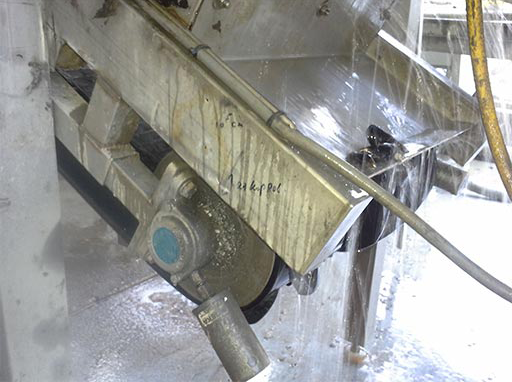
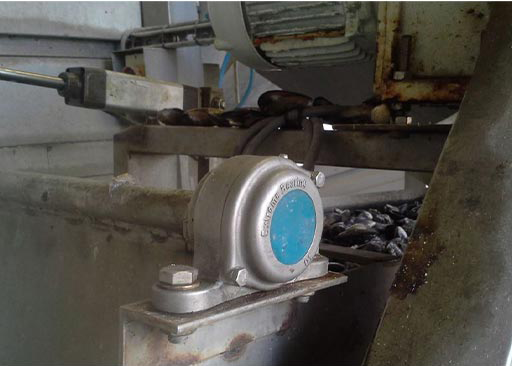
"There were some bearings where the ball bearings themselves were made of stainless steel but the housing was not. I decided to make a bearing with double roller bearings and a stainless steel housing," he says. "I also invented a special type of seal which I call the centrifugal seal. It is designed to keep the dirt out."
What makes Jaap's bearing unit unique is the stainless steel housing, the use of an adapter sleeve and a special centrifugal seal. This combination handles high radial and thrust loads with low friction, which makes it up to five times stronger. No one else offers a bearing like this. The bearing housing is made to his specifications and is not available from other bearing companies.
Extremely Good Bearing
He knew he had invented something special for the mussel companies in the town of Yerseke. "Now I have a bearing that is extremely good for you," he told his customers back in 2012. Jaap called it the 'Extreme Bearing'. It lived up to its name. Instead of lasting three months, the bearing lasted for years.
"I was with a customer in the mussel processing industry recently and we inspected all the Extreme Bearings in his factory by opening up the end covers," says Jaap. "There was absolutely nothing wrong with the bearings after one year so we closed them up again and they can go on working for another year before the next inspection is due."
"The mussel processing industry has the worst conditions you can find for a bearing: cracked shells, sand and the presence of saltwater," comments Jaap. "If the bearing works here, I believe it will work anywhere."
The Extreme Bearing was invented for the mussel industry but is now finding a niche in many other applications around the world with extreme conditions.
Bearing Knowledge - Standing on the Shoulders of Giants

Using the understanding gained by major thinkers who have gone before in order to make intellectual progress. Some very nice, readable bearing knowledge for technology enthusiasts!
Types of Bearings
There are five main types of bearings:
- Solid bearings - Used for spindles in textile mills, ring spindles, and small shafts
- Two-part bearings - The majority of bearings are of this type, used for connecting rods, line shafting
- Four-part bearings - Used principally as main bearings in large horizontal steam engines and gas engines
- Thrust bearings - Designed to counteract pressure in the direction of the shaft, used in hydro-electric units, steam turbines, ship propulsion
- Ball and roller bearings - Operate on the principle of rolling friction instead of sliding friction
Two-Part Bearings (Pillow Block & Flange Units)
The majority of bearings are of this type. In the two-part bearings made in halves, usually of cast iron surfaced with babbitt metal. Two-part bearings are used for small and medium size line shafting. These bearings are usually lined with babbitt metal but are sometimes made of brass.
The two-part bearing is not suitable where the pressure on the journal is directed against the joint of two bearing halves. Large bearings operating under such conditions are, therefore, frequently designed as four-part bearings.
The Evolution of Bearing Lubrication
As long as machinery has been in existence, there have been bearings to lubricate. The problem of bearing lubrication is, therefore, the oldest of all lubricating problems.
Until comparatively recent years bearings were crudely designed and low-speed conditions prevailed. The lubricants employed were vegetable oils, such as olive, rapeseed and castor oils; animal fats and oils, such as tallow and lard oil, sperm and whale oil.
The enormous industrial development that has taken place in the last half century has brought into existence engines and machinery of all kinds embodying greater efficiency in operation. There are today a variety of bearings operating under higher speeds, higher pressures and higher temperatures than have been known at any previous time in the world's history.
Lubricating oils have, of necessity, undergone a similar great development, made possible only by the discovery and use of mineral lubricating oils manufactured from a variety of petroleum crudes found in many parts of the world.
The Extreme Bearing Difference

316 Stainless Steel Pillow Block Bearing
Building on this rich history of bearing technology, Extreme Bearing has combined traditional engineering principles with modern materials and innovation. Our stainless steel 316 bearing units with double roller bearings and centrifugal seals represent the next evolution in bearing technology - designed for the most extreme conditions imaginable.