
Introduction
As long as machinery has been in existence, there have been bearings to lubricate. The problem of bearing lubrication is, therefore, the oldest of all lubricating problems. Until comparatively recent years bearings were crudely designed and low-speed conditions prevailed.
The lubricants employed were vegetable oils, such as olive, rapeseed and castor oils; animal fats and oils, such as tallow and lard oil, sperm and whale oil.
The enormous industrial development that has taken place in the last half century has brought into existence engines and machinery of all kinds embodying greater efficiency in operation. There are today a variety of bearings operating under higher speeds, higher pressures and higher temperatures than have been known at any previous time in the world's history.
Lubricating oils have, of necessity, undergone a similar great development, made possible only by the discovery and use of mineral lubricating oils manufactured from a variety of petroleum crudes found in many parts of the world.
The important factors in bearing lubrication become apparent when the subject is divided into its fundamentals.
Therefore, we treat, in successive chapters: the construction of bearings; the conditions under which they operate; the various systems by which oil is applied; the principles of lubrication; the treatment of frictional heat; the manufacture, physical properties and selection of oils; the properties and use of grease; typical bearing troubles with their remedies; and the attainment of true economy in bearing lubrication by the use of the correct high-grade lubricants in the right way.
Construction and Bearing Types
A bearing is a support for a revolving shaft or the like. The bearing is usually composed of the following parts: the brasses — bearing pieces or steps (usually made of brass or of cast iron surfaced with anti-friction metal commonly known as babbitt) which surround the journal or bearing surface of the shaft; the block, pedestal or frame supporting and enclosing the brasses; and the keep or cap which secures the whole together by means of bolts or studs.
There are five main types of bearings: Solid bearings, Two-part bearings, Four-part bearings, Thrust bearings, and Ball and roller bearings.
Solid Bearings
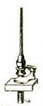
Fig. 1 – Vertical ring spindle using solid bearing
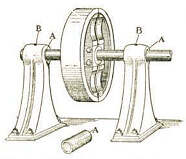
Fig. 2 – Solid bearing with replaceable bushing
In all solid bearings, the shaft or bearing can only be removed from endways, and the bearings cannot be adjusted when worn. To provide for ready examination or adjustment the two-part or four-part bearings are built up around the shaft.
Solid Bearings (Fig. 1) are used to support the vertical high-speed ring spindles used in textile mills. Solid Bearings or bushings are all small in size. They are bearings used for loose pulleys and small shafts, and in a variety of machinery, such as cranes and hoisting machinery. They are also used as piston-pin bearings in the great majority of internal combustion engines.
A bushing or sleeve (A — Fig. 2) is frequently provided so that when the bushing is worn it can be replaced.
Two-Part Bearings
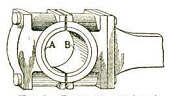
Fig. 3 – Two-part bearing for crank pin of connecting rod end
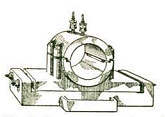
Fig. 4 – Large two-part journal bearing with adjusting liners
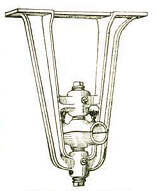
Fig. 5 – Two-part bearing for line shafting
The majority of bearings are of this type. In the two-part bearings the brasses are made in halves, usually of cast iron surfaced with babbitt metal.
Fig. 3 illustrates a two-part bearing for the crank pin of a connecting rod end. A and B are the bearing brasses shown in two parts.
Fig. 4 illustrates a two-part bearing used for larger journals. Between the top and the bottom halves are placed liners, thin strips of metal. When the bearing wears, one or more of these strips may be removed, so as to bring the two bearing brasses closer together around the shaft.
Fig. 5 illustrates a two-part bearing used for small and medium size line shafting. These bearings are usually lined with babbitt metal but are sometimes made of brass.
The two-part bearing is not suitable where the pressure on the journal is directed against the joint of two bearing halves. Large bearings operating under such conditions are, therefore, frequently designed as four-part bearings.
Four-Part Bearings
These bearings are used principally as main bearings in large horizontal steam engines and gas engines. The brasses are built up in four parts.
Side wear is taken up by turning vertical adjusting screws (A), thus moving the vertical wedge (B) which pushes the bearing brasses closer around the shaft. Vertical wear is taken up in a similar manner by adjustment of screw (C) which moves the horizontal wedge.
Thrust Bearings
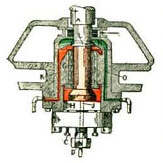
Fig. 6 – Vertical foot-step bearing for a steam turbine
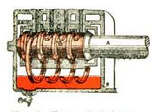
Fig. 7 – Ring-oiled plain thrust bearing
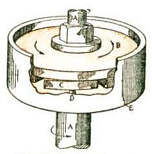
Fig. 8 – Vertical thrust bearing for water wheel installation
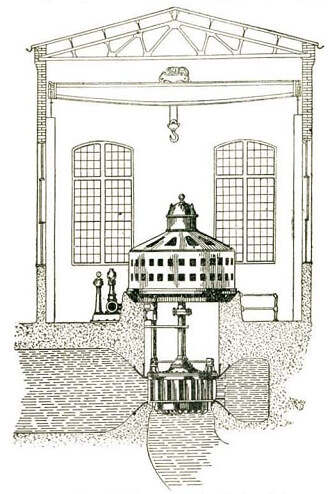
Fig. 9 – Hydro-electric thrust bearing installation
Thrust bearings are designed to counteract pressure in the direction of the shaft and so keep the shaft in its correct position while supporting the load in vertical units or acting against the thrust forces in horizontal units. Thrust bearings are extensively used in hydro-electric units, steam turbines, for ship propulsion, for centrifugal pumps, etc.
Fig. 6 illustrates the principle of a plain foot-step bearing designed to support the vertical shaft of a steam turbine. It consists of a housing (F) holding in position the guide bearing (G) which, in turn, holds in position the vertical shaft (A) supported at the bottom by foot-step (H). The footstep (H) may be adjusted in position by means of support and adjusting screws (D and C).
Oil is forced at high pressure between the footstep (H) and the bottom of the vertical shaft (A) through drilled passageways (J). The entire weight of the vertical shaft (A) is thus borne by the thin lubricating oil film. After lubricating the foot-step bearing, the oil passes upward around the shaft (A) supplying lubrication to the guide bearing (G). The oil then overflows and leaves the bearing through passage (K) in the housing (F). In order to prevent condensed steam from the turbine from running down the shaft and mixing with the oil, a collar (L) is provided, which throws the water into a chamber (M) from which it is drained through passages (O) in the housing (F).
Fig. 7 illustrates the principle of a plain thrust bearing. On the shaft (A) are collars (B) which are part of the shaft. These collars revolve in recesses forming part of the thrust block casing (C) lined with babbitt metal (D).
Fig. 8 illustrates a vertical thrust bearing used in water wheel installation. The bearing consists of a flat annular plate (B) fixed to the top of the vertical shaft (A). The bottom face of the plate (B) is immersed in a bath of oil contained within the circular casing (E) and is supported in position by a number of shoes (C) mounted on fixed pivots (D). The oil which adheres to the bottom of the revolving plate (B) is drawn in and forms a wedge between the plate (B) and supporting shoes (C) due to the tilting action of the shoes.
Other types of vertical thrust bearings are made which support in a similar manner rotating parts of hydro-electric installations. Fig. 9 illustrates a part sectional view of a hydro-electric installation supported in the manner described.
Ball and Roller Bearings
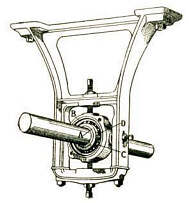
Fig. 10 – Ball bearing: inner race (A), outer race (B), balls (C), retainer (D)
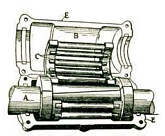
Fig. 11 – Roller bearing: raceways (A,B), housing (E), rollers (C) in cage (D)
Ball and roller bearings operate on a different principle than do other bearings. This consists in the substitution of rolling friction for sliding friction. The contact between the balls or rollers and the revolving surfaces is point contact in ball bearings and line contact in roller bearings, whereas ordinary bearings have large surface contact.
Ball bearings consist of a row or rows of balls held in position by a suitable retainer between an inner and outer raceway. Roller bearings consist of a set of rollers held in position by a cage between an inner and outer raceway.
The balls or rollers and raceways are usually made of high-grade steel, machined accurately, hardened, and ground. If slightly out of line or worn, internal stresses are set up with greatly increased friction, and with ultimate breakage of balls or rollers. Ball bearings are being adopted on numerous types of mechanical equipment.
They are most commonly used as automobile bearings and are also being used on motors, machine tools, transmissions and other classes of machinery.
Fig. 10 illustrates a ball bearing consisting of raceways (A and B) between which the balls (C) revolve, being held in position by suitable cages or retainers (D) which travel around with the balls.
Roller bearings are widely used in automobiles. They have also been adopted for transmission bearings of various classes of railway equipment and heavy-duty bearings of machinery. Fig. 11 illustrates a roller bearing, consisting of raceways (A and B), bearing housing (E) and rollers (C) held in position by a suitable cage (D).
Both ball and roller bearings may be adapted to either vertical or horizontal positions. Ball bearings may or may not be of self-aligning construction, as described under the heading "Operating Conditions."
The frictional resistance at starting, of machinery equipped with plain bearings, is several times as great as the resistance after a few revolutions when the oil film has been formed in the bearings. The friction at starting machinery equipped with ball and roller bearings is very little greater than the friction during operation.
Due to the substitution of rolling for sliding friction, ball and roller bearings when properly lubricated will run with much less friction than plain bearings and they may be considered among the highest types of bearings. The main function of a lubricant on ball and roller bearings is to keep the highly polished surfaces clean, bright and free from corrosion. The lubricant also reduces to a minimum the slight amount of friction present. It also acts as a deadener of the noise of the motion of the balls or rollers.
Bearing Material
The shafts and journals are usually made of iron or steel. The material of which the bearing surfaces are made is brass, anti-friction metal, or, in some cases, cast iron. The bearing surfaces are always made of a metal softer than the steel in the revolving journal so that as wear occurs it will be chiefly in the bearing, which can be more easily replaced.
Brass has been used for a long time as bearing surface material and gives excellent service if the bearing surfaces are well scraped together with the journal. Otherwise, the bearing will easily heat up, because of excessive pressure on the decreased bearing surface.
Babbitt Metals — These are combinations of hard metal, such as antimony, mixed in varying proportions with lead and tin, forming babbitt or white metal (anti-friction metal). When the bearings are lined with suitable babbitt metal, the journal easily beds itself down and distributes its weight uniformly over the entire bearing surface. Lining the bearings with anti-friction metal is a practice rapidly gaining favor, for, when wear takes place, the anti-friction metal lining can be easily replaced.
Cast-Iron Bearings — Cast-iron bearings are generally used for small and medium-sized shafting; the bearings are long and the bearing pressures are low.
Workmanship — Workmanship refers to the attention which has been given to the finish of the bearing surfaces, the clearance between the journal and the bearing, and the alignment of the erected bearing.
Finish of Bearing Surfaces — The rubbing surfaces are never exactly true and smooth. If a new shaft is put into new bearings without oil, it will, when revolving, touch the bearing surfaces only on certain high spots, distributed more or less evenly over the surface. For this reason the brasses are scraped. In this process the surface of the shaft is made as smooth as possible and the high spots of the bearing surfaces are scraped down until finally the shaft bears uniformly on the whole of the bearing area.
Clearance — The diameter of the shaft is always slightly smaller than the diameter of the bearings. The difference between the two diameters is called the bearing clearance. The clearance should average about 1/1000 of an inch per 1-inch diameter of the shaft — rather less than this for large bearings.
Alignment — When machinery and shafting are erected, it is very important that the various bearings be truly and accurately fitted. If the horizontal shafting is supported by a number of bearings, and some bearings are placed too high and others too low, or not in line, stresses will be set up in the shafts and bearings, which will produce high bearing temperatures.
Operating Conditions
Correct lubrication of bearings is dependent upon the following important factors: Size of bearing (diameter of shaft), Speed of shaft (revolutions per minute), Bearing pressure (pounds per square inch), Bearing temperature (operating temperature in degrees Fahrenheit), and Mechanical conditions (good or bad).
Size of Bearings — Bearings are made in all sizes and may be divided into: Small sized bearings — up to 1 inch shaft diameter; Medium sized bearings — 1 to 3 inches shaft diameter; Large sized bearings — greater than 3 inches shaft diameter. The surface of the shaft or journals is never perfectly smooth nor round, but it will possess a roughness, invisible except through a magnifying glass. The imperfections are greatest in the larger journals.
Speed of Shaft — The shaft may revolve at: Low speed — below 50 r.p.m.; Medium speed — from 50 to 300 r.p.m.; High speed — over 300 r.p.m.
Bearing Pressures — The pressures to which bearings are subjected may be moderate or excessive. Moderate pressures are those well within the capacity of the design of the bearing with reference to its service requirements. Excessive pressures on bearings are due to excessive weight, pull or thrust. Excessive weight conditions exist when more weight is put on the bearing than that for which it was designed. The excessive pull is usually due to very great belt tension. Excessive thrust is due to abnormal duty or to faulty mechanical adjustments. Excessive pressures will usually be manifested in their effect on the oil distribution, resulting in higher temperatures.
Bearing Temperatures — The temperatures of bearings in service are termed moderate or extreme. Moderate temperatures may be considered those not higher than 140 degrees F. Extremely high temperatures (in excess of 140 degrees F.) are due to deficient radiation, internal friction or the effect of high surrounding temperatures.
Extreme surrounding temperatures may be due to induced heat or climatic conditions. High temperatures resulting from internal friction may be caused by: the mechanical conditions may be wrong; an improperly selected oil may be in use; an insufficient quantity of oil reaches the part to be lubricated. These last three factors are due to negligence. Temperatures of bearings operating at greater than 140 degrees F. demand investigation.
Deficient radiation, resulting in temperatures higher than 140 degrees, may exist in bearings lubricated by means of the oil bath, the circulation or the splash system. Special oils must be selected for this extreme condition or provision must be made for reducing such oil temperature by means of a cooling apparatus or increasing the volume of oil in the system.
Bearing temperatures higher than 170 degrees F. indicate serious service conditions requiring close engineering attention.
Extremely low temperatures make it necessary to employ an oil of low cold test, otherwise the oil will congeal and will not flow to the bearing surfaces.
Mechanical Conditions — Bearings in time get out of alignment and are subject to wear. It is important that the bearings should be kept in good alignment and repair by renewing bushings, brasses or babbitt linings, adjusting bearing for wear, etc. When trouble or irregularity in operation occurs the cause should be traced at once and the condition rectified, instead of being allowed to continue until it becomes serious.
Good Mechanical Conditions — By this term should be understood bearings of good design, suitable to conditions of operation, journals and bearing surfaces of good material, well finished and with suitable bearing clearance; bearings in good alignment and not appreciably worn. Under good mechanical conditions, lighter bodied oils, regularly applied, may be used which will insure efficient lubrication of the bearings.
Bad Mechanical Conditions — By this term should be understood bearings crudely designed, or of good design but allowed to get out of order; bearings made of poor or unsuitable material; bearing surfaces rough or worn; bearings out of alignment. Bearings under bad mechanical conditions, irregularly oiled or subject to an inefficient oiling system, necessitate the use of oils heavy in body.
Oiling Systems
The various systems by which oil is applied to bearings may be divided as follows:
For individual bearings: Hand Oiling, Drop Feed Oiling, Ring or Chain Oiling.
For group bearings: Splash System, Circulation System.
Special methods of lubrication: Oil Bath, Mechanical Force Feed Lubricator.
Hand Oiling
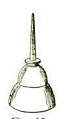
Fig. 12 – Spring bottom oiler
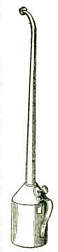
Fig. 13 – Long spout oiler for hard-to-reach bearings
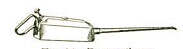
Fig. 14 – Pump oil can

Fig. 15 – Oil hole cover to keep dust out

Fig. 16 – Small oil cup with felt pad for uniform feeding
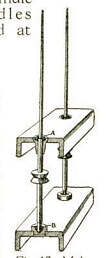
Fig. 17 – Mule spindles bearing arrangement
This is the oldest method employed for lubricating bearings. It is the least efficient and the most wasteful of all oiling methods.
Hand oiling is employed for the lubrication of low-speed shafting and low-speed bearings in a variety of machines, such as machine tools, cranes, etc. It is largely employed for oiling small parts of valve motions, valve spindles, etc., of steam engines, internal combustion engines and other power producers.
Hand oiling is also employed on various types of machines exposed to heavy vibration or rough usage where a lubricating device would be shaken off or broken.
In the bearing is an oil hole (B) usually in the top part. The oil is applied by an oil can (Figs. 12, 13 and 14) by which it is possible to deliver one or more drops of oil. The oil runs down the hole (B — Fig. 2), is spread by the revolving shaft over the bearing surfaces and gradually works its way toward and out through the ends of the bearings (A).
After each oiling, the oil film in the bearing gradually becomes thinner and finally the bearing runs practically without lubrication until such time as it is oiled afresh. The lubrication is thus gradually reduced to a state of inefficiency, dependent upon the body of the oil in use, the length of the time between oilings, and the operating conditions.
In order to prevent the entrance of dust or flying matter, the entrance to the oil hole may be fitted with a cap (Fig. 15). By lifting or turning the outer cover (A) an oil hole (B) in the cup is disclosed, through which the oil is introduced. Another method (Fig. 16) is to have a little cup fitted into the oil hole and provided with a felt pad, into which the oil is poured. This method insures more uniform feeding of the oil.
Drop-Feed Oiling
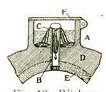
Fig. 18 – Wick/siphon oiler with reservoir, tube, wick and housing
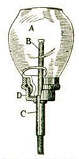
Fig. 19 – Bottle oiler: automatic, self-regulating with shaft speed
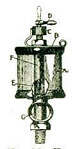
Fig. 20 – Sight-feed drop oiler with adjustable needle valve
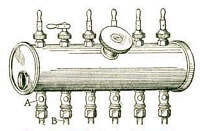
Fig. 21 – Multiple-feed drop oiler serving six bearings simultaneously
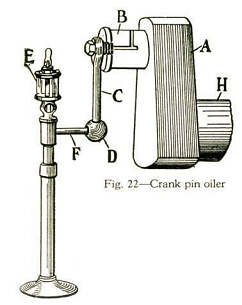
Fig. 22 – Crank-pin oiler using centrifugal force to feed oil
By the drop-feed oiling system, we refer to any automatic appliance which feeds a moderate and more or less regular supply of oil to the bearing. One oiler is fitted to the center of small bearings and two or more, suitably spaced, for larger bearings, providing at least one oil delivery into the bearing for every eight inches of bearing length. There are three types of lubricating devices operating on the drop-feed system: Siphon oiler, Bottle oiler, and Sight-feed drop oiler.
Siphon or Wick-Feed Oiler (Fig. 18) — When, in the early days of engineering, hand oiling proved inadequate for lubricating heavy-duty bearings, the wick-feed oiler was the first improvement introduced. Wick-feed oilers are employed for the lubrication of main bearings of marine steam engines and other prime movers, as well as for the lubrication of medium-size bearings of shafting and a variety of machines of all kinds.
The wick-feed oiler consists of a container (A) in which oil is filled to a certain level; the siphon oil tube (B) projects above the oil level; the wick (C) is introduced into the oil tube, this end being at a lower level than the end immersed in the oil in the container. The wick (C) consists usually of one strand or more of woolen yarn, preferably of loose texture, which feeds more than yarn of tight twist and close texture.
The higher the oil level in the container or the thinner the oil, or the deeper the wick is introduced into the oil tube, or the greater the number of strands, the greater will be the oil feed. When so many strands are used that they choke the oil tube, a point is reached where the addition of more strands will reduce the oil feed because of the greater resistance in passing through the tight wicking.
Siphon wicks in time get choked with impurities and become inoperative. They should, therefore, be renewed at suitable intervals. Where machines or engines are running intermittently, the wicks should be lifted out of the oil tube and left in the oil containers every time the machinery stops; otherwise, they will continue feeding and waste the oil.
The Bottle Oiler (Fig. 19) — This device has been developed primarily for the lubrication of light and medium-size shafting bearings operating at low to moderately high speed and under conditions which make a small constant feed desirable. The glass bottle (A) has a brass holder (D) fitted with a brass tube (C). A steel spindle (B) fits loosely inside the brass tube (C), its lower end resting on the shaft in the bearing. The shaft, when revolving, gives the spindle a very slight up and down motion, which has the effect of drawing a small supply of oil from the glass bottle. The oil flows down the spindle and finally reaches the bearing surface.
The bottle oiler is automatic in action, starting and stopping with the motion of the shaft. If the bearing gets warm, the spindle will heat up; the oil surrounding the spindle will become thinner and more oil will be fed. Bottle oilers should not be used on machinery exposed to rough usage, as the glass bottles are easily broken.
The Sight-Feed Drop Oiler (Fig. 20) — This is extensively used on modern engines and machines of all kinds. The sight-feed oiler can easily be adjusted to feed one drop of oil per minute or more. The sight-feed oiler has a glass container (A) so that the level of the oil can be observed. The end of the adjusting needle or valve spindle (E) is guided into a conical hole in the bottom of the central sleeve (F). By turning the milled collar (C) the needle can be raised or lowered so as to give a greater or smaller feed.
Some advantages of the sight-feed drop oiler are: the feed can be quickly adjusted; quickly started and stopped; and the oil level, as well as the oil feed, is clearly visible. Sight-feed drop oilers may be arranged with multiple feeds as illustrated by Fig. 21.
Ring or Chain Oiling
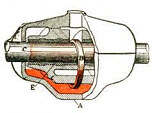
Fig. 23 – Cross-section of ring-oiled bearing with oil reservoir
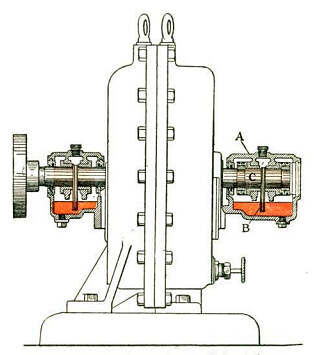
Fig. 24 – Small turbine with ring-oiled main bearings
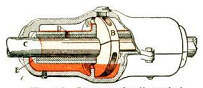
Fig. 25 – Collar-oiled bearing: the collar dips into oil and carries it to the shaft
This type of oiling system is largely employed on high-speed shafting bearings and on practically all electric motors, electric generators and small steam turbines. Ring-oiled main bearings are often used on gas engines and oil engines, as well as many stationary steam engines.
Ring oiling is used for medium as well as large-size bearings, but not for small high-speed bearings, as the oil rings would fail to revolve on the shaft due to its small size and high speed. The bearing housing (A) (Figs. 23 and 24) forms an oil reservoir in which the oil is maintained at a certain level, preferably indicated by an oil gauge. The rings will not touch the oil if the oil level is allowed to fall too low and the bearings will receive no lubrication.
On the shaft (C) are usually suspended one or two rings or chains (B) which dip into the oil. When the rings revolve with the motion of the shaft (C), they carry oil to the top of the shaft, from which point it runs into the oil-distributing channel and bearings.
Sometimes instead of revolving rings or chains, there is a collar (B) (Fig. 25) fixed to the shaft (C). This collar (B) dips into the oil and carries it above the shaft, whence the oil is guided into the oil channel (D) and bearing.
The oil leaves the ends (E) of the bearing and drops back into the oil reservoir. It is thus kept in constant circulation. There is very little oil waste in a well-designed ring-oiled bearing.
Leakage sometimes will occur through the side of the bearing, between the top and bottom parts. This can be overcome by inserting a thin lead wire (F) (Fig. 25), which, when the bearing is put together, will be pressed flat and seal the bearing.
It is important that the oil reservoir be deep and contain a large quantity of oil, so that impurities which may enter the bearing will separate and fall to the bottom and not be kept in circulation. In large bearings, cooling of the oil by the introduction of a cold-water coil in the reservoir may be found desirable or even necessary under severe conditions.
Splash Oiling and Circulation Systems
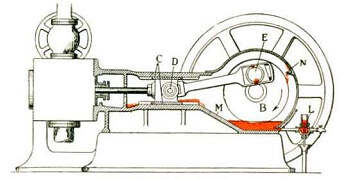
Fig. 26 – Splash oiling system in enclosed crankcase
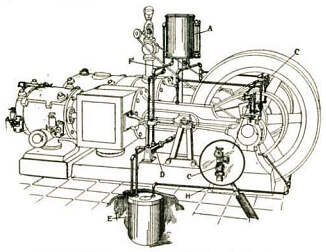
Fig. 27 – Non-pressure gravity circulation system for steam engines
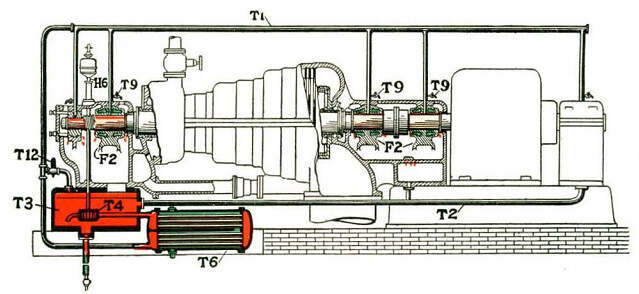
Fig. 28 – Pressure oil circulation system for steam turbines (3–20 PSI)
Splash Oiling (Fig. 26) — This system is employed for lubricating a number of bearings in an enclosed casing and is frequently found in small enclosed vertical or horizontal steam engines, air compressors, gas engines, oil engines, and automobile and motorcycle engines.
The enclosed crank chamber (M) is filled with oil to a certain level. Means should be provided to maintain this level as constant as possible by providing an automatic overflow (L).
In some small steam engines, motorcycle engines and certain types of automobile engines, the crank disk (B) or the flywheel revolving inside the crank chamber (M) is arranged so that it dips into the oil. The oil is picked up by the revolving rim and thrown off by centrifugal force. Oil wells or pockets (N) cast on the inside of the casing collect the oil and lead it through various channels, tubes, or troughs, to parts to be lubricated.
When engines are not equipped with a crank disk (B), dippers are fixed to the crank-pin bearings (E). These dippers dip into the oil when the engine is in operation and produce inside the crank chamber a spray or mist of thousands of tiny drops of oil, which constantly reach the moving parts.
Circulation System — There are two main systems embodying the oil circulation principle: Non-pressure oil circulation system and Pressure oil circulation system.
Non-Pressure Oil Circulation System — This system does not deliver oil to bearings under direct pressure. It is employed for automatically lubricating main bearings, crank pins, crossheads, crosshead guides, etc., comprising most of the external moving parts in medium or large size steam engines, gas engines and Diesel engines; also for some steam turbines, groups of large shafting bearings, etc.
In the lubrication of the steam engine shown (Fig. 27), oil flows by gravity from the supply tank (A) through the distributing pipes (B). Sight-feed glasses (C) are located in each pipe line, through which the oil is fed by regulated adjustment to the bearings. Having done its work, the oil drains back from the various parts through return oil pipe (H) to the sump tank (E). The oil pump (D) driven by the engine draws the oil from the sump tank and delivers it through pipe (F) into the gravity supply tank (A).
Pressure Oil Circulation System (Fig. 28) — Oil is delivered under pressure as directly as possible to the various bearing surfaces requiring lubrication. This system is largely employed for lubricating steam turbines, the enclosed type of steam engines, Diesel engines, oil engines and automobile engines, etc. From the lower portion of the governor spindle is driven the oil pump which takes oil from the oil tank and delivers it at from 3 to 20 pounds pressure per square inch, through the oil cooler, directly to the bearings through oil supply pipe. A relief valve in a by-pass controls the oil pressure in the line.
Oil Bath and Mechanical Force-Feed
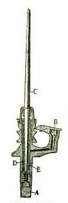
Fig. 29 – Oil bath system cross-section: spindle rotates in oil-flooded bolster
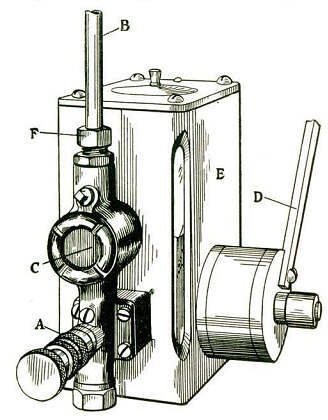
Fig. 30 – Single-feed mechanically operated lubricator
Oil Bath — This system is only employed for vertical bearings, such as the light-weight, high-speed spindles employed in textile mills, or the footsteps of heavy vertical shafts of gyratory crushers and hydro-electric units.
Fig. 29 illustrates the Oil Bath System, as employed on ring spindles. The bolster case (A) holds in position the bolster (D) and acts as an oil reservoir. The spindle (C) is free to revolve in the bolster (D). Spindles are hand-oiled through the oil way (B) in the bolster case (A).
By the centrifugal force of the revolving spindle, oil is drawn into the bolster (D) through the drilled holes (E) and is constantly lifted to the top of the bearing, whence it overflows and drains back into the lower part of the bolster. Thus a constant circulation of oil is produced and the spindle bearing is kept flooded with oil.
A certain amount of oil is wasted in leakage and must be made up at suitable intervals. A small amount of oil should be added every four or six weeks through the oil hole.
Mechanical Force Feed Lubricator (Fig. 30) — Either single feed or multiple feed mechanically operated lubricators are occasionally employed for feeding oil to important bearings. The advantages are that, being operated by lever (O), actuated from some moving part of the engine, the mechanically operated lubricator starts and stops with the engine. It feeds the oil more uniformly and regularly and, therefore, with less waste than sight-feed oilers or wick oilers; also, because of the pressure, a much heavier oil can be fed if required.
The oil is taken from the container (E) by a mechanically operated pump (A). It is fed through the feed pipe (B), fitted with a check valve at the pump and at its extreme end in order that the pipe shall always be filled with oil. As soon as the engine starts, the lubricator operates and the oil is immediately delivered under pressure from the end of the oil pipe.
Whatever the oiling system employed, it is important that a regular routine be instituted for maintaining it at its highest efficiency. Bearings that are hand-oiled should be oiled at frequent intervals to insure the presence of an oil film at all times. The oil containers in wick-feed oilers, bottle oilers, sight-feed oilers and mechanically operated lubricators should be filled at regular intervals. Lubricators should never be allowed to run empty or to get choked with dirt.
Oil Distribution and Lubrication Principles
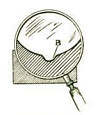
Fig. 31 – Rounded oil groove edges prevent scraping
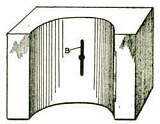
Fig. 32 – Oil distributing groove in top bearing
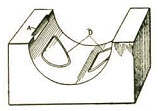
Fig. 33 – Chamfered brass edge facilitates oil entry
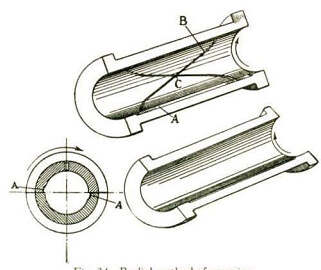
Fig. 34 – Radial grooving method for oil distribution
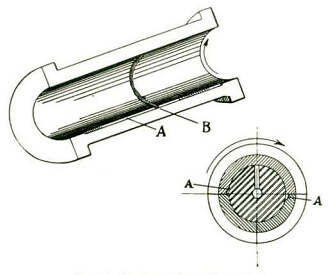
Fig. 35 – Annular groove in bearing for forced-feed oiling system
A revolving shaft will draw the oil into the bearing because of the tendency of the oil to adhere and cling to the shaft. The heavier in body the oil, the greater will be this clinging action provided the shaft speed is moderate.
When shafting operates at low speed, the oil used should be heavy in body. At higher speeds, an oil lighter in body may be used, and for very high speeds, oils very light in body must be used.
Oil grooves should be cut shallow and the edges rounded off as in Fig. 31 to permit oil to be drawn between the bearing surface and the revolving shaft. Sharp edges will scrape the oil from the surface of the journal.
To assist in spreading the oil over the full bearing surface, an oil groove (B) (Fig. 32) is sometimes cut in the surface of the top bearing. The edges of the bottom bearings should always be chamfered or filed away, forming an oil groove parallel to the shaft to facilitate the drawing in of the oil between the revolving shaft and the bottom bearing brass.
Oil grooves should never be cut to the ends of the bearing brasses, otherwise the oil will escape from the bearing, resulting in the necessity of using a greater quantity of oil to prevent overheating of the bearing.
Under normal conditions of service it is undesirable to employ grooving on bottom brasses, because the surfaces of bearings made irregular by oil grooves tend to interfere with the formation of the wedge-shaped oil film between the revolving shaft and the supporting bearing.
Lubrication — Friction is defined as the resistance to motion or tendency to motion, existing between surfaces in contact. Friction is, therefore, an influence retarding motion. The effect of friction is wear and heat and is greatest between dry surfaces. The introduction of a fluid medium between surfaces will reduce both heat and wear. Fluid friction is the resistance to motion of the molecules of a fluid.
The object of bearing lubrication is: First, to form an oil film between the rubbing surfaces and thus replace metallic friction with fluid friction. Second, by the selection of the correct oil to keep the fluid friction in the oil film itself as low as possible under the operating conditions.
No Lubrication — If a journal should revolve in its bearing without lubrication, metallic contact would cause abrasion of the metal. This would produce excessive friction and wear and would manifest itself in the development of great heat. Totally unlubricated bearings could operate but a very short time before the frictional heat developed would be so great as to destroy the bearing surfaces.
Insufficient Lubrication — When an insufficient quantity of a lubricating medium is introduced between metallic rubbing surfaces, the lubricant will adhere to both journal and bearing and thus will replace only part of the metallic friction with fluid friction. There will, therefore, be less abrasion, less friction, less heat and less wear. The majority of bearings are insufficiently lubricated.
Correct Lubrication — Correct lubrication can only result from the use of the particular high-grade oil selected to suit the oiling system and the operating conditions. The oil will maintain a complete lubricating oil film, eliminate wear, and at the same time reduce the fluid friction to the lowest possible degree. Correct lubrication insures the minimum cost of frictional losses, repairs and renewals of parts and guarantees continuous operation.
Frictional Heat
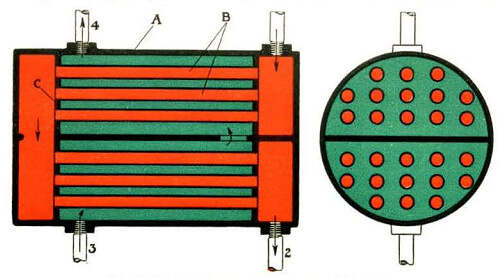
Fig. 36 – Oil cooler for circulating lubrication system
The frictional heat developed between a revolving journal and its bearing penetrates both the journal and bearing. Where bearings are neither water-cooled nor lubricated by a circulation oiling system, the whole of the heat developed must leave the bearing or journal by radiation into the surrounding atmosphere.
Bearings, therefore, assume a temperature higher than the surrounding room temperature; and the greater the friction, the greater will be the difference in temperature between any part of the bearing and the room temperature. This difference is termed the frictional rise in temperature, or simply the frictional temperature, and forms a true guide to the quality of the oil in service.
When heavy-duty bearings operate under high-speed conditions, the heat developed may become so great that it cannot be radiated from the bearing surfaces with sufficient rapidity. Under such conditions it becomes desirable or necessary to introduce a circulation oiling system. The flow of oil through the bearings not only provides a lubricating oil film, but also carries off a large portion of the heat developed.
In the lubrication of steam turbines, which operate at very high speeds and where, in addition to the frictional heat, heat from the steam-heated parts must be reckoned with, it becomes necessary to supply the bearings with a great flow of oil to carry off the heat from the bearings and permit them to operate at safe temperatures.
The heat is transferred from the oil to the water coils in an oil cooler. Fig. 36 illustrates an oil cooler. The container (A) is usually a cylindrical shell. Pipes or coils (B) are fixed in position by means of headers or fixed partitions (C). The oil pipes constitute the passage for the oil through the cooler. The space in the container constitutes the passageway through which the cooling water is carried. The water thus completely surrounds the oil pipes or coils. The oil is introduced by means of pipe (1) and after passing through the cooling pipes is discharged from pipe (2). Similarly the water is introduced by means of pipe (3) and is discharged through pipe (4).
Bearing Oils: Physical Properties and Selection
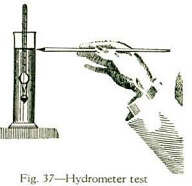
Fig. 37 – Hydrometer test for oil specific gravity
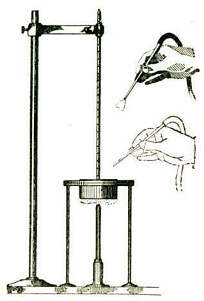
Fig. 38 – Flash and fire test apparatus
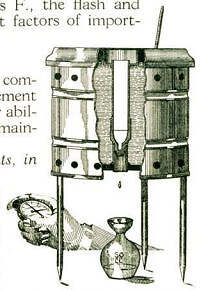
Fig. 39 – Saybolt Universal Viscosimeter
We are now in a position to analyze the lubricating oil. The subject is divided into the following heads: physical properties of oils; the selection of the correct oil; oil quality.
Physical Tests — It is impossible, from the physical properties of lubricating oils, to draw definite conclusions as to their lubricating values. Nevertheless, during manufacture, certain scientific tests are essential. These tests are not aimed to determine the efficiency of the oil; they are simply checks to make certain that the oil is running uniform — that every lot manufactured is up to the proven standard.
Following are outlined a number of the tests used for this purpose: Gravity, cold test, flash and fire test, viscosity, loss by evaporation, and compounding.
Gravity — Density or specific gravity of an oil is the scientific determination of its weight as compared with the weight of the same quantity of water at 60 degrees F. For measuring liquids lighter than water, the Baume hydrometer is largely employed. The gravities of different oils vary widely and in such an inconsistent manner that it is hopeless to try to draw any conclusions from this test as to their lubricating value. This test is simply used to determine the uniformity in weight of the oil.
Cold Test — The cold test of oil is to determine the low temperature at which the oil ceases to flow. A bottle of oil is placed in a freezing mixture, and by frequent inspection of a thermometer the temperature at which the oil congeals is noted.
Pour Test — The pour test of an oil is likewise a low temperature reading determined by first freezing a partly filled bottle of oil; then upon removing it from the freezing mixture, notation is made of the temperature at which the oil will flow from one end of the bottle to the other.
Flashpoint — The flash test indicates the lowest temperature at which the vapor from an oil will ignite momentarily but not continue to burn when an open flame is brought near its surface. As operating temperatures of bearings seldom exceed 120 to 140 degrees F. and the flashpoint of the lightest bearing oil is over 300 degrees F., the flash and fire tests are not factors of importance.
Viscosity — Viscosity is a comparative measurement of oils as to their ability to form and maintain an oil film. The Saybolt Universal Viscosimeter (Fig. 39) is the instrument in general use in this country. It determines viscosity as the time in seconds required for a known quantity of oil, at a definite temperature, to flow through an orifice of known dimensions.
The viscosity of an oil is always lower at higher temperature. Obviously it is important that the viscosity of an oil should vary as little as possible with variations in temperature. Oils that vary the least in viscosity with variations of temperature will feed more uniformly through the lubricating appliances than oils which vary considerably.
Compounding — Experience has proved that under certain conditions a compounded oil — that is, a mineral oil to which has been added a certain amount of good quality fixed oil (animal or vegetable oil) — is more suitable than a straight mineral oil. Compounded oils possess more adhesion than straight mineral oils of the same viscosity. They have the property of combining and emulsifying with water, so that their use is desirable where water gains access to the bearings.
Selection of an Oil — The oil must be selected to suit the conditions of size, speed, pressure, temperature and mechanical conditions. Light-bodied, quick-acting oils must be selected where the bearings are small, where the shaft speed is high, where the bearing pressure or temperature is low and where the mechanical conditions are good. Heavy-bodied oils possessing great adhesion must be employed where bearings are large, where the shaft speed is low, where the bearing pressure or temperature is high and where the mechanical conditions are not good.
Oil Quality — Low-grade Oils — Low-grade oils are ordinarily oils improperly manufactured. They lack uniformity, have high internal fluid friction and many of them vary in viscosity under slight variation in temperature. When using low-grade oils in ring oiling, splash oiling, oil circulation or oil bath systems, the oil breaks down under the continuous service. The oil has a comparatively short life, and develops troublesome deposits which accumulate in dangerous places, and choke up oil pipes, oil channels and grooves.
High-grade Oils — High-grade oils are manufactured from specially selected crudes, carefully refined and treated with the ultimate object of giving each oil definite and uniformly maintained characteristics. High-grade oils have low internal fluid friction and vary considerably less in viscosity under slight variations in temperature than low-grade oils. The correct high-grade oil, applied by any oiling system, will have a much longer life than ordinary oil. It will not develop deposits during use, and will separate easily and quickly from water and impurities.
Lubricating Greases
In cup greases, the difference in melting point between the soft grease (No. 1 consistency) and a hard grease (No. 5 consistency) is comparatively small, i.e., 12 to 15 degrees F. Soft, light bodied greases contain more lubricating oil than heavier bodied greases. The soft grease begins to lubricate almost the instant it is applied to the bearing, whereas a hard or more dense grease does not begin to lubricate until the bearing temperature becomes sufficiently high to soften the grease.
The efficiency of a grease depends upon: First, the quality of the fat employed in the manufacture of the body and the quality of the oil incorporated in the finished grease. Second, the selection of the correct density or consistency to suit the type of bearing and method of application. Third, the purity of the grease.
Quality — The quality of the grease depends first upon the selection of high-grade fats and lubricating oils; and second, upon the care employed in the manufacturing processes to make a grease which will meet specific operating conditions. For minimum and high speed work with no excessive bearing pressure a grease of soft density containing light bodied lubricating oil should be chosen. For medium and slow speed work with fairly heavy bearing pressure a medium to hard density grease containing heavier bodied oils should be chosen.
Consistency — If the grease is fed through an automatic spring grease cup it should be of soft consistency No. 1 or No. 2. These same consistencies are recommended for high speed ball and roller bearings. For hand compression grease cups, consistencies No. 2, No. 3 and No. 4 may be employed. A grease of No. 4 or No. 5 consistency may be selected for use on open bearings where the grease rests directly on the rotating shaft, usually found only in slow speeds.
Purity — The purity of a grease is particularly important. In the manufacture of greases, impurities in the raw materials produce insoluble lumps and foreign substances that must be removed. It is obvious that for high speed conditions and other exacting service, finely pulverized impurities or particles of improperly manufactured body will cause very serious trouble.
Grease is practically indispensable for the lubrication of certain bearings under certain conditions. In dusty and dirty surroundings, grease entirely fills the bearing cavities and clearance spaces, collecting and forming a fillet around the shaft at the bearing ends. This seals the bearing and prevents dust, dirt and other abrasive material from entering. Semi-fluid and soft density greases are sometimes used for ball and roller bearings. The bearing is completely filled with the grease, so that a fillet is formed at either end, which prevents the entrance of dust and abrasive materials.
Greases should always be used for the lubrication of bearings located in inaccessible places when ordinary means for applying oil are not practicable. Such bearings are usually fitted with grease cups and the grease forced by pressure through long pipes into the bearings.
Bearing Troubles
When bearing trouble occurs, it is usually indicated by increased heat in the affected bearing. Let us analyze a number of the causes leading to heated bearings.
When the barrels of oil have been delivered by the manufacturer, it is important that they be stored under cover. They should never be left in the open, exposed to sun and rain. Rain water will find its way through the staves and gradually dissolve the inside lining of the barrels, causing it to spread throughout the oil.
The oil should always be poured through a strainer into the oil cans. Dirty oil cans are responsible for many hot bearings and they should be kept scrupulously clean. An oil can should never be used for more than one grade of oil.
Wrong Oil — Numerous hot bearings have been caused by the use of the wrong oil. If a spindle oil is used instead of an engine oil, heating will result because the oil is too light in body to provide lubrication. If a very heavy oil is used in place of spindle oil, heating will result because the oil is too heavy to spread over the bearing surfaces.
When hand oiling is employed, bearings will overheat if the application of oil is not sufficiently frequent or regular. When drop-feed oiling is employed, many hot bearings can be traced to empty lubricators. Sometimes bearings heat up because the oil congeals in the lubricator or in the feed pipes and fails to reach the bearings. Parts of the lubricator, or the oil-feed pipes, may become choked with deposits.
Too Few Oil Inlets — Very long bearings sometimes give trouble if they have too few oil inlets. A bearing more than 12 inches long with only one drop-feed oil inlet at the center is always liable to be a trouble maker.
In ring-oiled bearings, water of condensation from steam or a very moist atmosphere enters and accumulates in the bottom of the bearings. The water gradually lifts the oil out of the bearing, until finally the oil rings revolve in water and heating occurs. Deposits formed by the oil itself or by impurities entering the bearing may cause the oil rings to stick.
Bearings lubricated by the splash oiling system may heat if the oil level is too low to provide adequate oil spray, or if the oil has become emulsified by the presence of water of condensation.
In circulation oiling systems the oil capacity should be large enough to permit cooling of the oil and thorough separation from impurities. Deposits may be due to unsuitable or improperly manufactured oil, or to the mixing of water and oil, or two different oils.
Speeding-Up — Speeding-up of machinery in order to increase production may cause heating. High speed will produce greater friction and may demand the selection of a higher quality oil. If the load on an engine is increased, some of the bearings may be unable to stand the increased strain.
Excessive Load — Excessive load on an electric motor or an unbalanced construction will cause high temperature. The extra heat conducted into the bearings may cause the oil film to break down. It is still common practice to replace bearings without scraping them in with the shafts — considerable heat develops during this crude practice.
Whenever a bearing has been excessively hot, the bearing brasses warp, and the edges of the brass close against and nip the shaft. Cracked bearing brasses allow the oil to leak away. Too soft white metal frequently leads to heated bearings. Too hard bearing metal not properly fitted frequently results in heating.
Replacement of Bearings — When worn bearing brasses have been replaced, the bearings sometimes heat because the new brasses have not been properly fitted and scraped together. If the bearing clearance is too small, heating will occur. If the adjustment is too loose, the oil will escape too freely.
Introduction of New Oil — Where oils of vegetable or animal character have been in use and the new oil introduced is straight mineral, the change-over should take place gradually. The best practice is: for the first two weeks a mixture of 75% of the former oil and 25% of the mineral oil; in the succeeding two weeks 50% of each; the following two weeks 25% of the old and 75% mineral oil. Nearly always when introducing a new oil which is appreciably different in character, some bearings will heat up due to the better quality of the new oil dissolving deposits produced by the old oil.
Cooling Heated Bearings
When small bearings heat up, they are usually easy to cool down, as the total amount of heat present in the bearings is relatively small. Usually a liberal supply of the oil in use is all that is required. If the bearing is heated to such an extent that it has been distorted or the white metal has started to flow, it must be dismantled and put in thorough working order.
When large bearings heat up, the case is very different. Large bearings may absorb and contain a great deal of heat. When once a large journal starts to heat and expand, there is relatively so little clearance that the oil film is easily squeezed out and the bearings may seize.
The first thing to do when a large bearing heats up is to increase the bearing clearance by slacking back the bearing brasses. If the bearing has not seized, but is extremely hot, it is usually sufficient to feed the bearing with a liberal supply of steam cylinder oil (which possesses superior lubricating properties under high temperatures) until the bearing cools, when the normal practice of oiling the bearing can be gradually resumed.
If the bearing has commenced to seize, a little graphite, sulphur, white lead, or like ingredients, mixed with cylinder oil, may be used to advantage.
Castor oil or rapeseed oil is occasionally employed for cooling bearings, but their use should be avoided, because where a circulation system is employed they mix with the engine oil and afterward develop deposits.
In case a "hot bearing" develops, seizure of the overheated shaft may take place if water is applied direct to the bearing, on account of sudden shrinkage; if its use is necessary it should be applied to the shaft near the bearing.
True Economy
In judging the value of a lubricating oil, it must be borne in mind that oils are used to reduce friction and wear; that high-grade oils reduce friction and wear to a far greater degree than ordinary oils and that high-grade oils can be used most economically. Therefore, the price per gallon of an oil should not be considered primarily.
Where the class of machinery in use is rough or in bad repair, where wasteful and inefficient oiling systems are employed, and particularly where the care and attention given to the plant is indifferent or bad, it is not always possible to justify the use of high-grade lubricating oils; and under these conditions the use of ordinary or intermediate grade oils is justified.
High-grade oils correctly selected to suit the operating conditions and intelligently used will outlast ordinary oils. Experience has proved time and again that the actual cost of high-grade oils over a period of time is less than the cost of ordinary oils.
Even where the actual cost of high-grade oils is higher than that of ordinary oils, the saving in power brought about by the reduction in friction, and the saving in wear brought about through superior lubricating properties, will amount, over a period of time, to many times the difference in the cost of the oils.
There are many plants in which it is declared that there is no lubrication trouble. Granting this, it is still a far cry from this "no-trouble" state to perfection in operation. Only by analysis of actual conditions, careful grouping of various parts of the machinery, and the use of specially selected high-grade oils which will give maximum lubrication service, can perfect results be secured and maintained.
In some plants there are a large number of high-speed bearings. The power consumed in overcoming friction in such plants constitutes a large percentage of the total consumption of power — sometimes more than 50%. The introduction of the correct, high-grade oils specially selected to suit the various groups of machines will effect an appreciable reduction in power, and also minimize the cost of renewals and repairs.
There are many types of modern high-speed machines, such as steam turbines, high-speed steam engines, and internal combustion engines of all kinds, where the continuous service conditions demand the use of the highest quality oil obtainable, almost regardless of its cost, and where smooth and safe operation and low frictional losses count many times more than the cost of the oil itself.