
How an Extreme Bearing Saves You Big Money
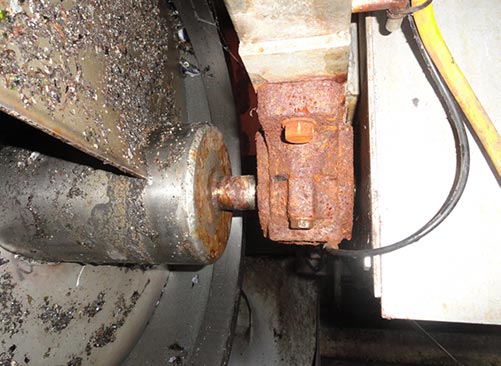
Everyone loves a bargain. So when a customer buys a new bearing unit, they often pay extreme attention to the purchase price. Especially if they work in procurement. This can be misleading. When the real cost is determined by running and maintaining the equipment where the bearing unit will be installed. How much a bearing will cost your company in the long run depends on this.
Real-Life Example: The True Cost of Bearing Failure
Here's one real-life example of how much an unplanned bearing failure can cost. It comes from a case story published in 2019 by Tetra Pak about a dairy customer in Spain. The separator is a critical part of the line in any dairy processing plant.
If the separator is not performing as it should, it can cause a stoppage. Due to the high utilization of separators that can be around 6,000 hours on a yearly basis, it was important for the Spanish dairy to avoid unplanned stoppages. If the bearing fails unexpectedly, the Tetra Pak separator needs to be dismantled and reassembled which requires 48 hours of downtime. In this case, it was estimated that by avoiding a single unexpected bearing failure, the customer could save €45,000 in spare parts, labour and lost production. That's a lot of Euros!
Critical Factor: Uptime and Working Lifetime
The point is that uptime and the working lifetime of the bearing is a critical factor to take into consideration, not just the purchase price. Every customer wants to avoid downtime and keep their plant running as planned. In fact, the initial cost of the long-lasting Extreme Bearing becomes almost irrelevant when you consider how much money it can save you by avoiding lost production and maintenance costs. Therefore see an Extreme Bearing as a good investment; perhaps the best bearing investment you will ever make.
Cost-Effective Solutions
- Increase Equipment Uptime - Longer bearing life means fewer stoppages
- Reduce Maintenance Costs - Less frequent replacements and maintenance
- One-time Investment - Save money by reusing housings while changing only the worn-out bearing inserts
- Avoid Lost Production - Reliable bearings prevent unexpected downtime
Total Cost of Ownership (TCO)
When calculating the true cost of a bearing, consider:
- Initial purchase price
- Installation costs
- Maintenance frequency and costs
- Expected service life
- Downtime costs (often the largest factor)
- Lost production value
- Emergency replacement costs
An Extreme Bearing may have a higher initial cost, but delivers up to 5x longer service life, dramatically reducing your total cost of ownership.